
Vocal Tracking Houston
June 2, 2026
Audio Production, Blog Posts
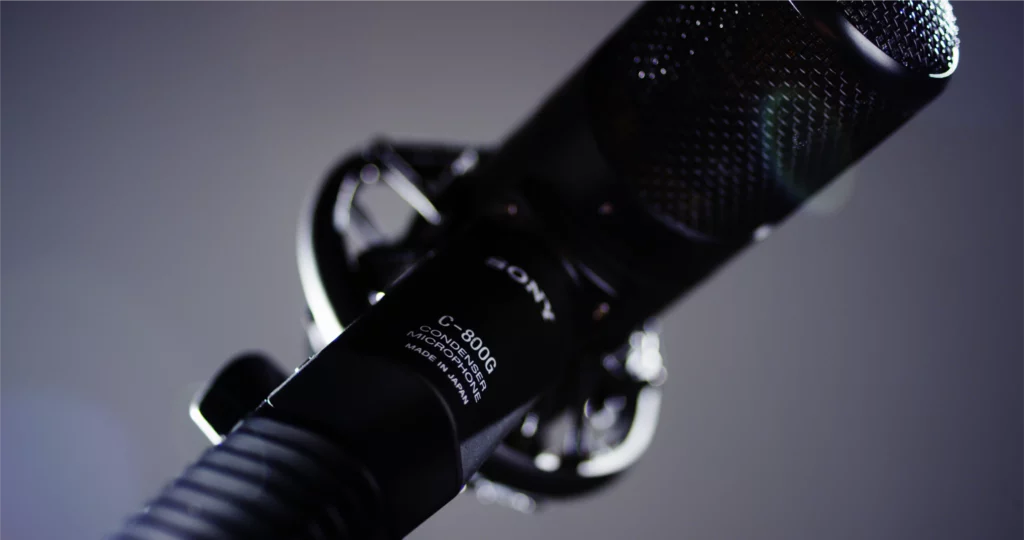
You bought the U87 microphone. You bought the Neve preamp emulation plugin. You’ve watched every Pro Tools mixing tutorial on YouTube. So why does your song still sound muddy in the car and thin on Spotify?
Because of the one thing you can’t download: Structural Acoustics.
In modern music production, mixing “In-The-Box” (digitally) is the industry standard. But a digital plugin cannot fix structural rumble or a bad room frequency. If you want your vocal tracking to sound like a major label release, you have to capture the truth at the source.
Here is the reality of what happens to your sound in a home studio versus a professional tracking environment like Studio 713.
The Reality Check: Bedroom Studio vs. The 713 Standard
| The Obstacle | The Home Studio Reality | The Studio 713 Solution |
| Low-End Mud | Sound bounces off parallel drywall, creating standing waves. | Custom 7-Foot ASC PCAD Panels to trap mid-bass and diffuse highs. |
| AC & Street Noise | Mics pick up neighborhood noise and structural vibration. | Floating Floors & Double-Layered Walls for total decoupling. |
| Thin Vocals | Digital interface preamps lack voltage and depth. | Hardware Neve 1073s & Tube-Tech CL1B on the way in. |
| Mixing Blindspots | Your room is “lying” to your ears, so you over-EQ. | Acoustically tuned control rooms where the bass is actual truth. |
| The Ear | Trial and error. | Engineers with Platinum Credits (Travis Scott, Don Toliver). |
3 Reasons Your Plugins Are Failing You
1. Foam Doesn’t Stop Bass (The PCAD Advantage)
The cheap acoustic foam you bought on Amazon only stops high frequencies (the “flutter” echo). It does absolutely nothing to stop the low-end frequencies that are building up in the corners of your bedroom and muddying up your vocal takes.
- The 713 Standard: Our live rooms are engineered with custom, oversized ASC PCAD (Poly Cylindrical Absorber Diffuser) panels. These massive architectural structures trap the problematic mid-bass while diffusing the highs, giving your vocal a thick, radio-ready body before we even open an EQ plugin.
2. The Microphone is Hearing the Floor
Even if your house is quiet, structural vibrations from the street or your air conditioner travel through the floorboards and up your mic stand.
- The 713 Standard: Our tracking rooms feature Floating Floors that are mechanically decoupled from the building’s foundation. This creates a shock-absorber effect. Your microphone hears exactly what you are singing, and absolutely nothing else.
3. You Can’t Mix What You Can’t Hear
If your room has a “dead spot” where the bass drops out, you will naturally boost the bass in Pro Tools. Then, when you play it in your car, the bass will blow your speakers out.
- The 713 Standard: When our engineers—like Ryan “Mellow” Venable or Matt O’Neil—pull up your track in our control rooms, they are hearing the absolute truth of the frequency spectrum. Because the room is perfectly tuned, every single plugin adjustment translates perfectly to Spotify, Apple Music, and the club.
Stop Paying for Frustration.
You have the talent. Stop letting a bad room hold your sound hostage. When you book a session at Studio 713, you aren’t just renting gear—you are investing in the exact structural physics used to track Billboard hits.
Get it right at the source.
Call (713) 640-5428 to book your personalized session.